
Montague County Criminal History Checks
No single search produces every Montague County record. Begin with the Montague County Tyler Public Portal when a prosecution may have reached a county court. The portal can help locate a case summary or cause number, but the live interface controls which search fields are available. A current jail entry, a police narrative, and a DPS public result are different products. Each answers a different question.
Use a full name, date of birth when lawfully available, likely filing period, and any case or booking number. Name spelling and aliases matter. A known cause number also avoids the District Clerk's paid name search. Work outward from the event rather than treating a name match as proof that the record concerns the right person.
- Search the county Tyler portal for a filed felony or Class A or B misdemeanor case.
- Identify the court level and note the cause number, filing date, status, and charge.
- Check the sheriff-linked custody page or call the jail when present confinement is the question.
- Ask the arresting agency for its incident or arrest report, using a focused written request.
- Use Texas DPS for the public statewide subset, or FAST fingerprints to review your own complete Texas record.
For charge, judgment, and sentence detail, continue to the Montague County court case lookup. Certified copies come from the clerk that holds the file, not from the search result itself.
Montague County Tyler Case Records
The District Clerk says county records are online and links the Tyler portal. It is the sound first stop for Montague County case records, especially when the goal is a cause number before ordering copies. The portal is not a complete Texas rap sheet. It centers on cases filed in participating local courts, while a jail record centers on custody and DPS centers on reportable statewide history.
The official Tyler portal interface shows the current county search environment.
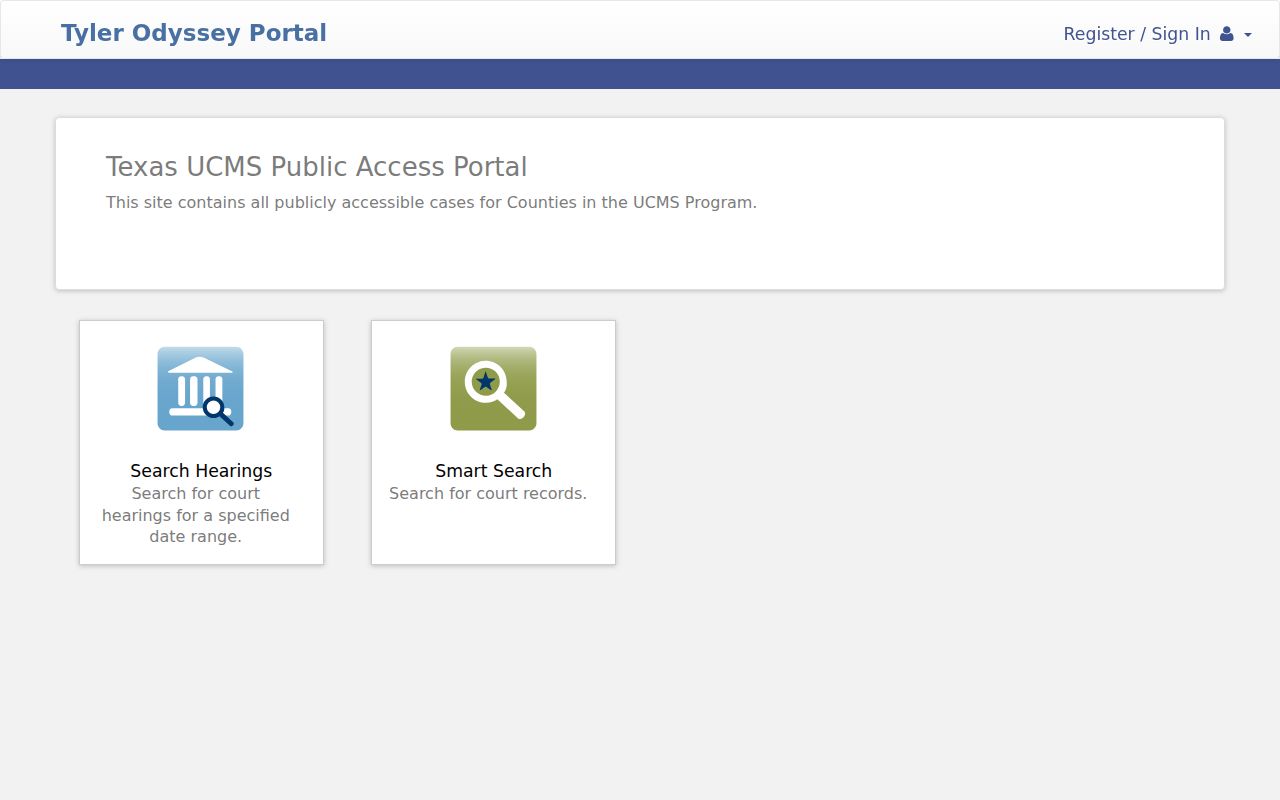
Dynamic labels may change, so use the controls shown in the live portal and do not assume every document image is open. Older or absent material still requires a clerk request.
| Starting detail | How it helps | Next record |
|---|---|---|
| Person name | Finds possible local case matches | Confirm in the case summary |
| Cause number | Targets one file and avoids a name-only clerk search | Request the named document |
| Court level | Separates felony, county misdemeanor, and fine-only matters | Contact the correct clerk |
| Filing or event date | Distinguishes similar names and case cycles | Compare docket and judgment dates |
Note: re:SearchTX is not a comprehensive public Texas criminal trial-case search, even though Montague parties may retrieve some electronically filed orders there.
Official Background Checks in Texas
The Texas Department of Public Safety Crime Records Division maintains the central Computerized Criminal History system. Its public Crime Records Service name search is limited by law. It mainly returns convictions and deferred adjudications that DPS may disseminate to the public. The July 2026 portal notice prices the initial search at one $1 credit. Credits are nonrefundable, and the live portal terms control if pricing changes.
A person reviewing their own complete Texas history should follow the DPS personal-review process and submit fingerprints through FAST, which uses IdentoGO by IDEMIA. A service code comes from DPS or the agency authorizing the check. No stable official Montague County enrollment address was found, so the live ZIP locator is safer than a guessed retail site.
The official FAST enrollment portal supplies current appointment locations after the correct service code is entered.
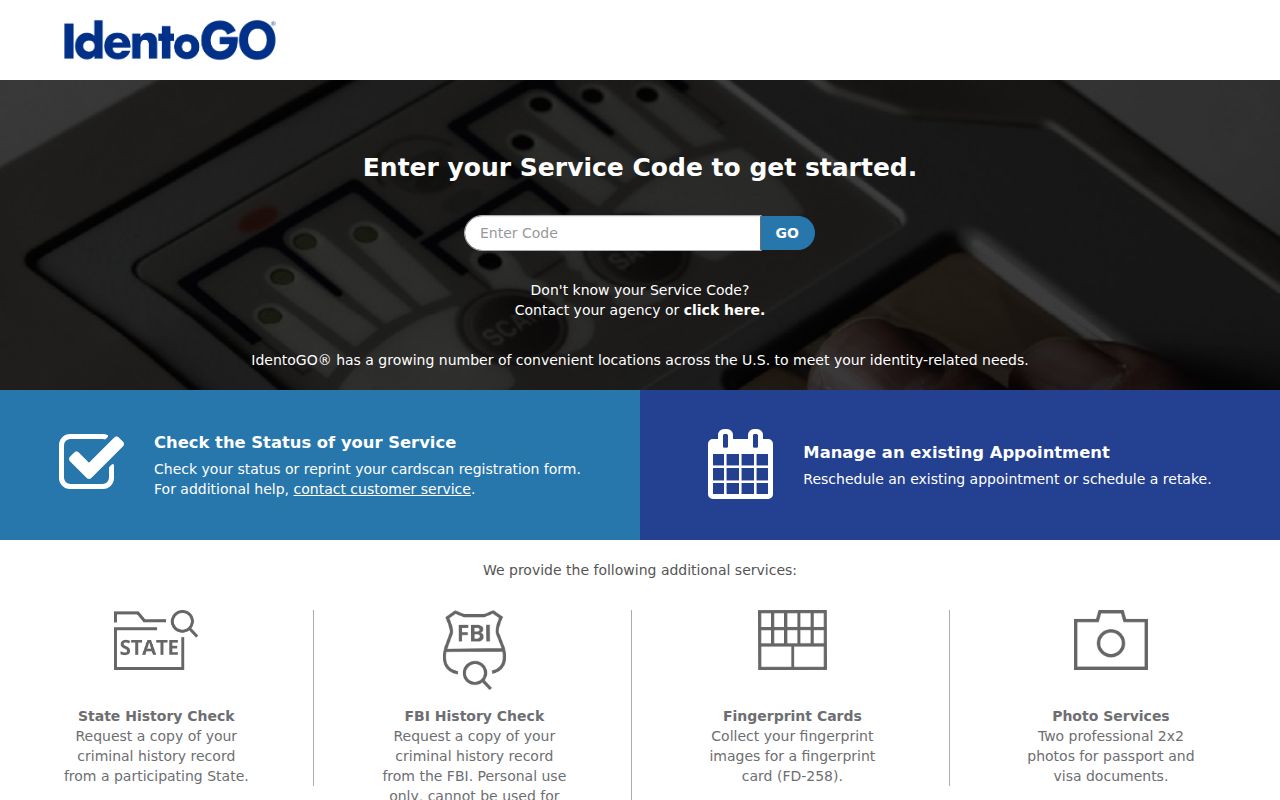
Fingerprint personal review ties the inquiry to the subject's prints. That makes it the right channel for finding and challenging gaps in one's own DPS record.
Montague Criminal Records in Four Offices
Montague County criminal records are consolidated in the county seat, but they are not centralized under one custodian. The 97th Judicial District Court and District Clerk hold felony files. The constitutional County Court and County Clerk handle Class A and B misdemeanors. The Sheriff holds its own incident, arrest, booking, and detention records. Municipal and justice courts retain their fine-only cases and court warrants.
This split also involves two court locations. The District Clerk works at 101 E. Franklin Street. The County Clerk and County Court use the Courthouse Annex at 11339 State Highway 59 North. The Sheriff and Detention Center are at 111 S. Grand Street. Sheriff requests can use the online form, email AAnderson@MontagueSheriff.com, mail to P.O. Box 127, or the counter. Both clerks close for lunch, while their posted closing times differ.
The official Montague County homepage provides the current office directory and county notices.
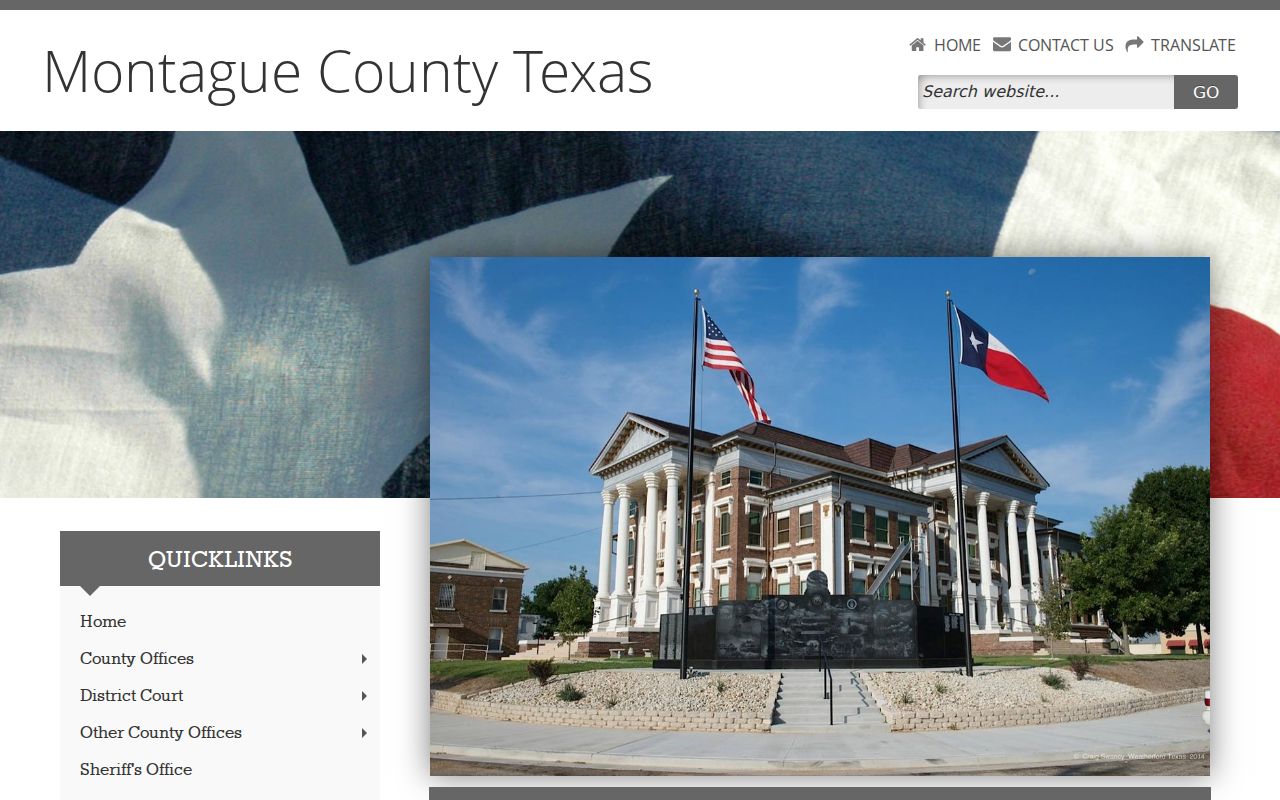
The courthouse view is useful orientation, but the record type determines which counter can actually produce a file.
District Clerk
101 E. Franklin St., Montague, TX 76251
940-894-2571
Felony files; 8:00 a.m.-4:45 p.m., closed noon-1:00.
County Clerk
11339 State Hwy 59 N, Montague, TX 76251
940-894-2461
Class A/B misdemeanors; 8:00-noon and 1:00-4:45 p.m.
Sheriff Records
111 S. Grand St., Montague, TX 76251
940-894-2491
Sheriff reports and written public-information requests.
Kinds of Criminal Records
A criminal-history search works better when the product is named precisely. An incident report preserves allegations and officer observations. A booking entry records intake and custody. A charging instrument states what prosecutors brought to court. The court file then shows settings, motions, pleas, disposition, and sentence. DPS links fingerprint arrest cycles to reported results when matching data reaches the repository.
- Arrest and incident report: held by the Sheriff, city police, constable, or trooper agency that created it.
- Booking record: held by the Montague County Detention Center for a custody episode.
- Court case file: kept by the clerk for the court where the charge was filed.
- Warrant or capias: tracked by the issuing court and the agency asked to execute it.
- Repository record: kept by DPS, with the public name view narrower than personal fingerprint review.
Charge class also routes the file. Capital, first-, second-, third-degree, and state-jail felonies go to the 97th District Court. The statutory ranges vary from 180 days to two years for a state-jail felony up to life or death where legally available for a capital felony. Class A and B misdemeanors go to County Court and can carry jail and fine exposure. A Class C matter is normally fine-only and remains in municipal or justice court, depending on venue. Enhancements can change the range, so read the charging instrument and judgment instead of relying on a short portal label.
- Disposition
- The outcome of a charge, such as conviction, dismissal, acquittal, or deferred adjudication.
- Capias
- A court writ directing arrest, including some writs tied to unpaid final judgments.
- Community supervision
- The Texas term for court-ordered probation-like supervision.
- Deferred adjudication
- Supervision without an immediate guilt finding; completion may lead to dismissal but does not erase every record.
Montague County Wrong-Office Record Rule
The county's most important access warning is easy to miss. Every elected office controls the information it holds. A request sent to the wrong department need not be forwarded. Asking a central county contact for a Sheriff video, a felony judgment, and a municipal citation in one request can therefore stall all three.
The county Open Records guidance explains this office-by-office rule and distinguishes judicial records from the Texas Public Information Act process.
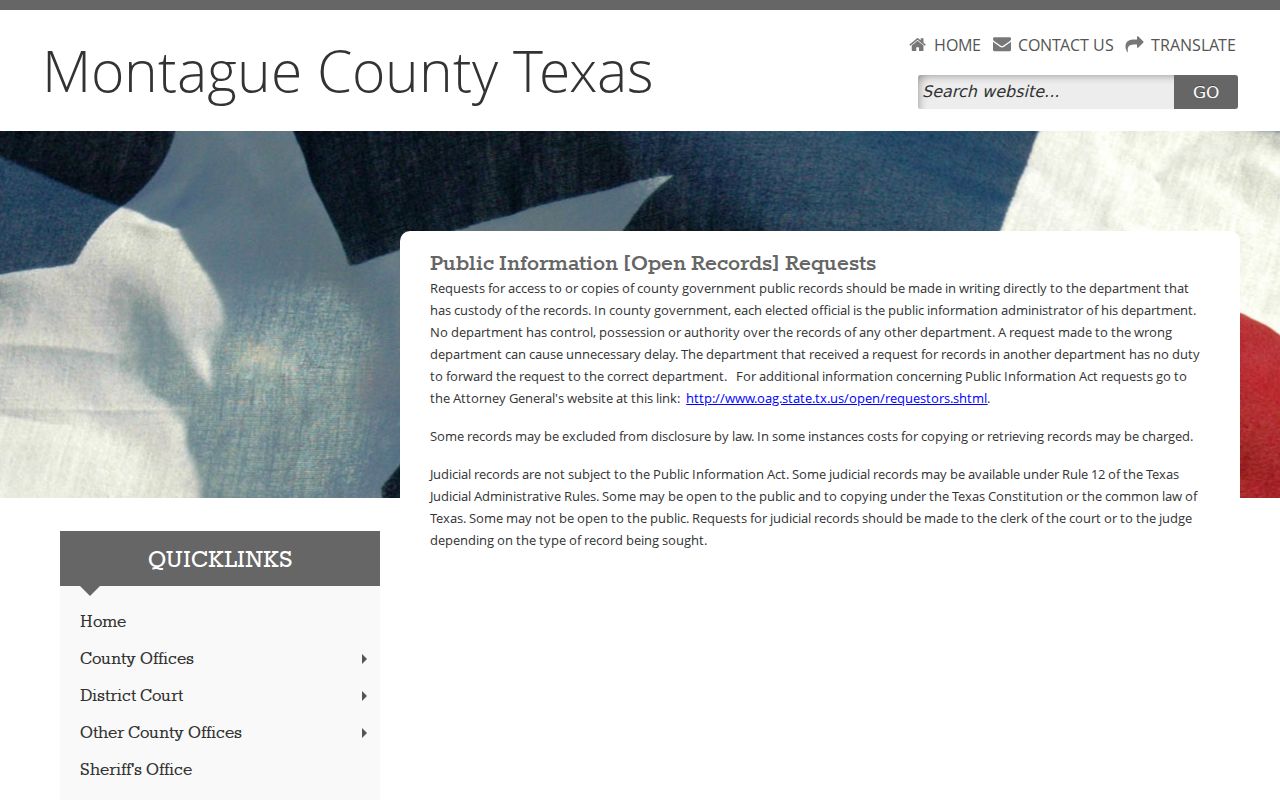
Send an existing-record description to the maker or keeper: felony documents to the District Clerk, county misdemeanor documents to the County Clerk, and Sheriff reports to the Sheriff's Records Department at AAnderson@MontagueSheriff.com, P.O. Box 127, Montague, TX 76251, or the 111 S. Grand counter.
| Requested record | Correct Montague custodian | Access route |
|---|---|---|
| Felony judgment | District Clerk | Tyler search, form, email, fax, mail, or counter |
| Class A/B misdemeanor file | County Clerk | Online records or clerk contact |
| Sheriff arrest report or video | Sheriff Records Department | Online form, email, mail, or counter |
| Fine-only city case | Issuing municipal court | City portal or court clerk contact |
Montague County Criminal Records: What They Contain
The contents depend on the record's job. A Tyler case summary revolves around the court, cause number, filing date, charges, docket events, settings, disposition, judgment, sentence, and financial entries. A jail record revolves around a single booking and release cycle. The public DPS result links reportable statewide arrest cycles and dispositions but omits local narrative reports.
| Name and identifiers | Names, aliases, date of birth, and agency or state identifiers where public and relevant. |
|---|---|
| Arrest and booking data | Agency, event date, booking number, alleged charges, bond, custody, and release fields when shown. |
| Charges and statutes | The alleged offense, legal citation, and classification at the arrest or filing stage. |
| Disposition | The court's result for each charge, with a date and status where entered. |
| Sentence | Confinement, fine, community supervision, restitution, or other ordered terms. |
| Custody or supervision | County jail, TDCJ, parole, or local community-supervision events in the proper source. |
Public views should redact Social Security numbers, full driver-license or account data, protected victim information, and many juvenile details. A signed judgment carries more weight than a short docket label.
Montague County Jail Booking Records
The Montague County Detention Center is a 101-bed, indirect-supervision facility at the Sheriff complex. Its booking record proves that intake or custody occurred. It does not prove guilt. The Sheriff-linked Inmates in Custody page is the official web route for current custody, though the interface may fail or change. When that happens, call the jail's 24-hour line at 940-894-2871.
Booking data can include a name, booking identifier, date, charge, bond, and custody status. Other fields appear only if released. After sentencing and transfer, a person may no longer appear in the county roster. Use the state locator instead.
The TDCJ Online Inmate Search provides fields for a person in state custody.
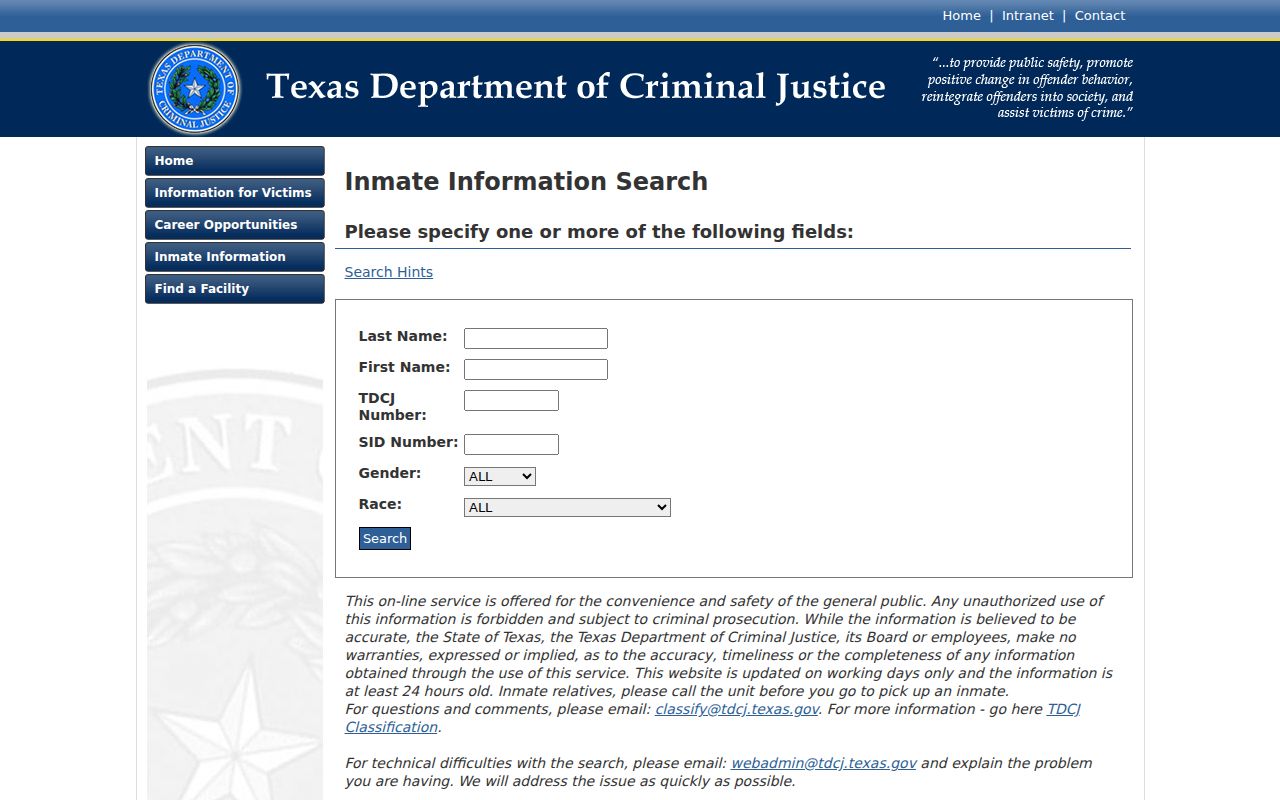
TDCJ can be searched by name and narrowing identifiers or by a TDCJ or SID number. Its offense, location, sentence, and projected release data do not replace the Montague court judgment.
Custody path: use the county roster or 940-894-2871 for recent Montague detention, then use TDCJ after transfer to a Texas prison. A booking number belongs to the county episode; a TDCJ or SID number follows the state record.
Texas Public Access Laws
Texas access law does not treat every criminal record alike. The Texas Public Information Act governs agency-held public information, but ordinary filed court case records follow court-specific, constitutional, common-law, and procedural access rules. DPS criminal-history dissemination is separately limited. A request can also trigger redaction or an Attorney General ruling when confidential material is involved.
Key statutes and rules:
Government Code Chapter 552 gives access to governmental public information and sets production and ruling procedures.
Government Code Chapter 411 limits criminal-history dissemination and authorizes the public conviction and deferred-adjudication subset.
Code of Criminal Procedure Chapter 55A supplies current Texas expunction eligibility and procedure.
Texas Rule of Judicial Administration 12 governs judiciary administrative records, not every filed case document.
Occupations Code Section 1701.661 requires specific incident details for body-camera requests and limits some releases.
Juvenile files, active investigative material, protected-person data, and records covered by a court order remain restricted even when a broad request is submitted.
Montague County Warrants Without a Portal
No dependable, comprehensive countywide online warrant database was verified. The Sheriff's Most Wanted page is not a certificate that a person does or does not have a warrant. Court-issued bench warrants and capias may stay with a municipal or justice court, and sealed, juvenile, or unexecuted records may not be public.
For a possible warrant on your own record, call the Sheriff at 940-894-2871 and contact the clerk that may have issued it. A focused written Sheriff request can seek releasable warrant information. The relevant court or counsel can explain a safe resolution path. Do not rely on an old screenshot before making a surrender or bond decision.
The county homepage also warns about jury-duty and tax scams. County offices do not call demanding payment by phone. Verify any claimed warrant or payment demand with the Sheriff or named clerk through an official number.
Restricted, Sealed & Expunged Records
Texas uses two different remedies. An order of nondisclosure restricts public dissemination of eligible criminal-history information, but criminal-justice agencies and certain named entities may still have access. Expunction under Chapter 55A is stronger and can direct qualifying records to be destroyed or returned. Neither result should be inferred merely because a case is missing online.
Eligibility is fact-specific. Acquittal, pardon or actual-innocence relief, some dismissals or no-bills after required periods, and some arrests without a final conviction may qualify. Related charges, a criminal episode, waiting periods, limitations, and statutory exclusions can change the answer. The current Chapter 55A took effect in 2025, so older article numbers may be obsolete.
The Montague District Clerk accepts filings at 101 E. Franklin. Its forms page offers a nondisclosure form, but a current official expunction filing fee was not found. Ask the clerk for the civil filing and service total. After an order, verify the county portal and review your own DPS record by fingerprint. Send a certified order to an agency if an official record still appears.
Montague County Supervision and Custody Records
Community supervision, the Texas term commonly used for probation, runs locally through the 97th Judicial District Community Supervision and Corrections Department. Its operational notes are not the same as a public judgment. Parole has a separate chain: the Texas Board of Pardons and Paroles makes release decisions, while the TDCJ Parole Division performs supervision. The Board of Pardons and Paroles explains the decision side.
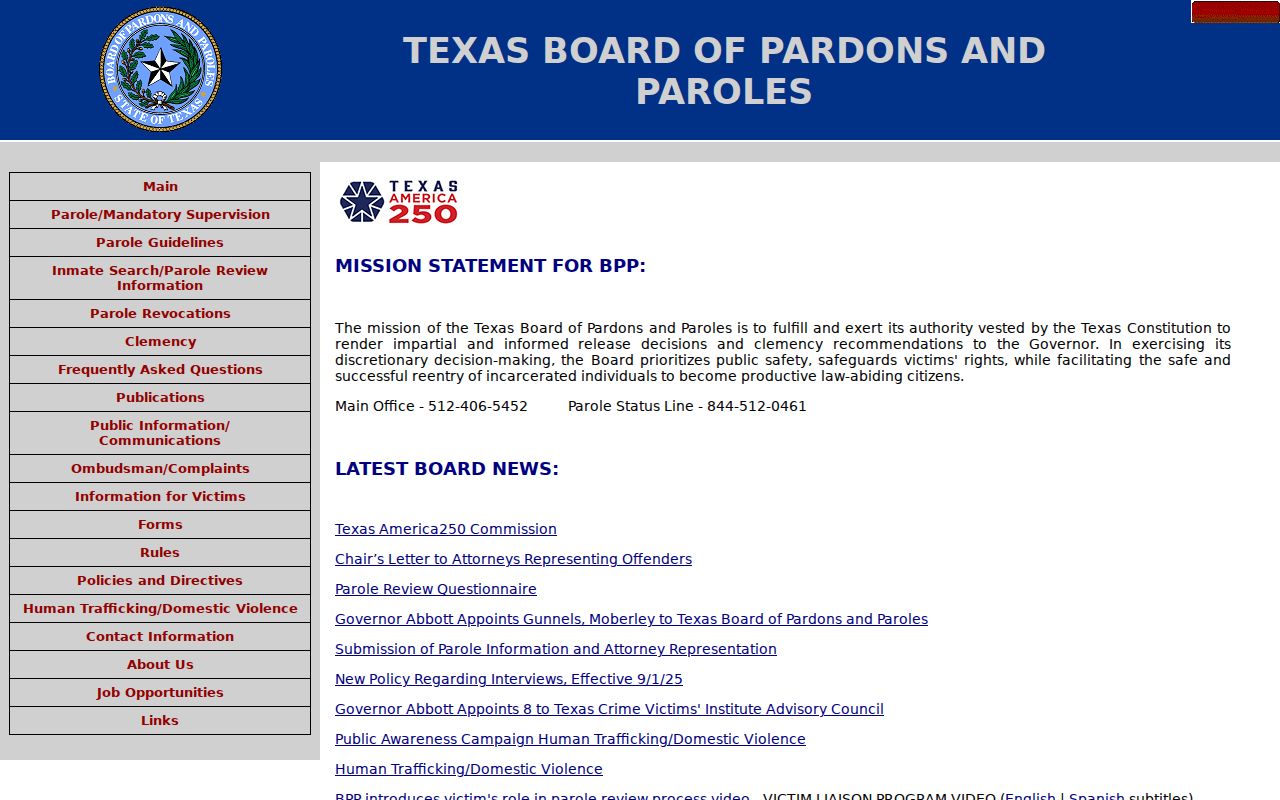
The board resource should be paired with the supervision side, not mistaken for a Montague County court docket. The TDCJ Parole Division publishes the related supervision and office resources.
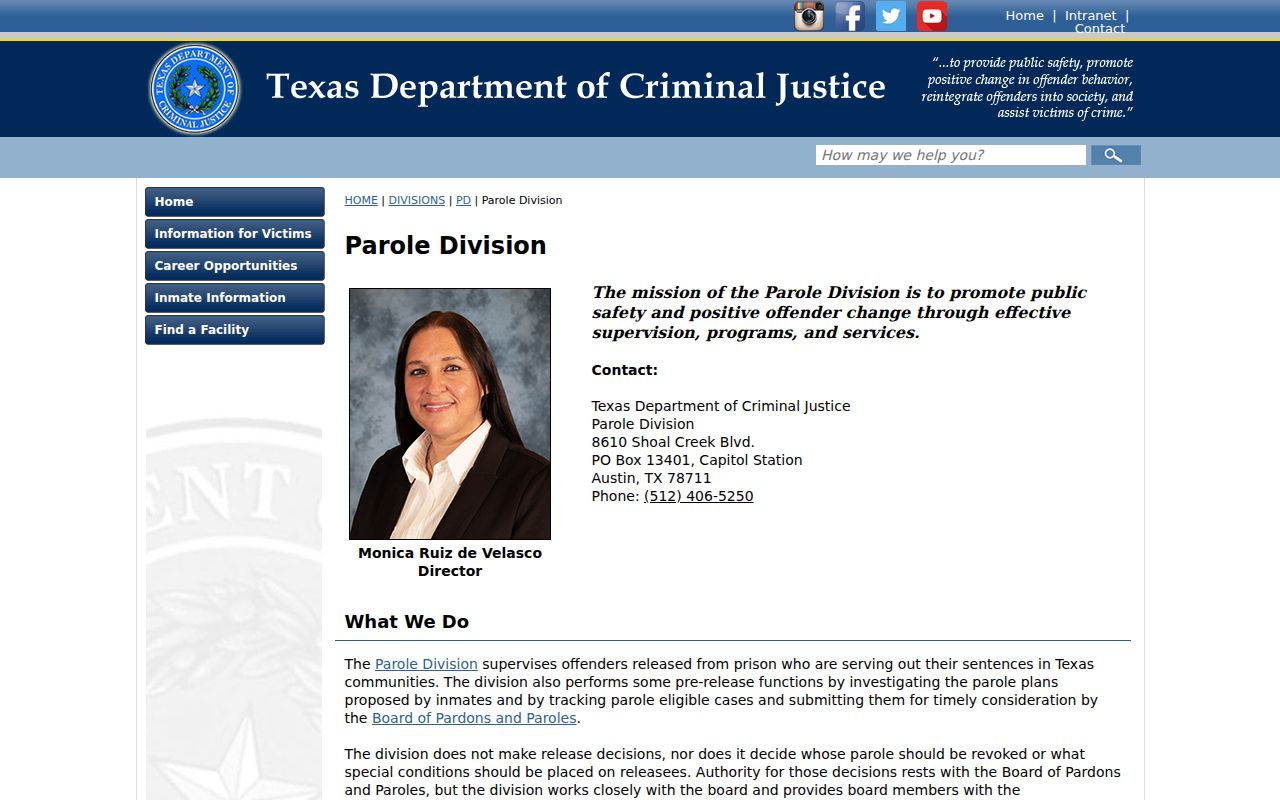
Together, the sources show why release decisions, supervision, and the underlying criminal judgment are related but distinct records. Verify a sentence or filed revocation event through the clerk.
Montague County Criminal Record Geography
Montague County spans more than 900 square miles. Bowie and Nocona are much larger than the county seat, yet district, county, sheriff, and jail records converge in Montague. A city incident report therefore may remain miles from the higher-level court file created later. The arresting agency, not the highway or final jail, controls the original narrative.
US 81/287 and state highways can produce cases involving city officers, deputies, constables, and DPS troopers. Ask which agency investigated before sending a public-information request. County constables, municipal police, and state patrol records do not automatically become Sheriff reports merely because the person was booked at the county jail.
This geography makes phone and online checks useful before travel. Confirm the office, record type, hours, and cause or booking number. The District Clerk and County Clerk have different addresses and lunch closures, and the Sheriff complex is at a third address.
City-by-City Criminal Records in Montague County
Bowie, Nocona, and Saint Jo each keep city-level records through local police and municipal-court channels. A city police report stays with that city. Present custody moves to the Montague County Detention Center when county detention is required, while Class A or B misdemeanor and felony cases move to the proper county clerk. Each city guide follows that local chain without treating a municipal citation as a county felony file.
Bowie Record Check
2023 estimate: 5,912. Bowie has a police records section, municipal citation portal, and court of record.
Nocona Record Check
2023 estimate: 3,165. Nocona keeps police reports locally and offers six municipal citation search modes.
Saint Jo Record Check
Third in the county ranking. City Hall and municipal court provide phone, email, mail, and counter access.